
OXFORD DICTIONARY REVIEW: FEATURES AND HOW TO USE
Why use an English-English dictionary?
- Understand the context and usage of words in English
Each language has its own unique usage, depending on the context and usage of the word.
For example, in Vietnamese, ‘change’ has only one meaning, used in many cases, but in English, there are many words that mean ‘change’ such as: revise, reform, modify, adjust, amend, refine,…. In which, each word is used for different meanings.
The word ‘amend ‘ means a change in a document/document/law, while the word ‘ reform ‘ means a change in a system, organization, or apparatus. - Building a way of thinking and thinking in English
When using an English-English dictionary, instead of trying to translate the meaning into Vietnamese, reading and understanding the meaning of English words, combined with reading related examples is necessary to distinguish the usage, context and deepen the meaning of vocabulary.
From this, students will gradually build a way of thinking and thinking in English, thereby avoiding common mistakes when learning English later such as expressing writing in spoken Vietnamese, and reflexively speaking slowly because of the need to translate from Vietnamese to English.
Introducing Oxford Dictionary
Oxford Learner’s Dictionary is certainly no stranger to English learners. With many useful features, accurate translations, affordable prices (free when using the website version), easy-to-understand explanations and examples, Oxford Dictionary is favored by most IELTS learners and currently, Oxford Dictionary is holding the top position among the most used online dictionaries.
Features in Oxford Dictionary
(See how to use each feature below)
– Look up words , especially vocabulary divided into British English and American English groups
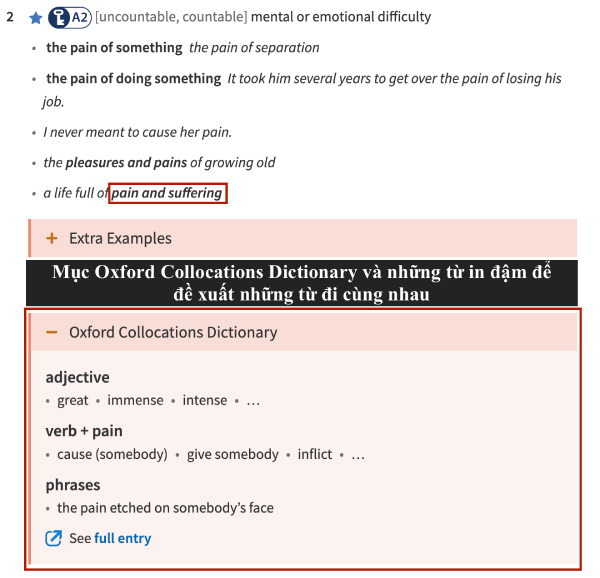
– Oxford Collocation Dictionary : Collocations are words that go together.
Examples of collocations: do homework, clean the house,..
– Oxford Grammar Dictionary : Oxford Grammar Dictionary synthesizes all English grammar knowledge from basic to advanced most fully.
– Oxford Word List : the outstanding feature of the Oxford dictionary is the Word List. Divided into 6 categories, including:
- Oxford 3000 and 5000: A collection of all the most important English vocabulary. When starting from zero, 2G Education recommends that you review this vocabulary list first because it is the most complete foundation for understanding the language more deeply later.
- OPAL (Oxford Phrasal Academic Lexicon): Synthesizes all the academic vocabulary needed for Writing and Speaking skills
- Oxford Phrase List: A collection of all the most important vocabulary phrases when learning English.
- My Word List: This feature is for learners. If you want to save necessary vocabulary for later reading, the My Word List feature can serve that purpose. Oxford will create a vocabulary list specifically for you.
- Topics: Vocabulary by topic.
With 18 major topics, including countless sub-topics, the Oxford dictionary’s Vocabulary by Topic feature promises to be a powerful assistant for IELTS candidates in Writing and Speaking skills. - Recent Additions: With this feature, learners will be updated about new vocabulary added to the dictionary. On average, a new word is created every 98 minutes. Therefore, this feature is a great way to update vocabulary.
HOW TO USE OXFORD DICTIONARY AND OTHER FEATURES.
How to look up single words and root words.
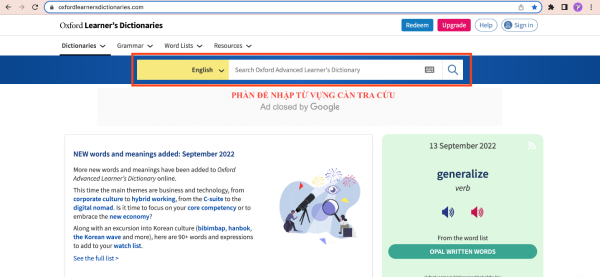
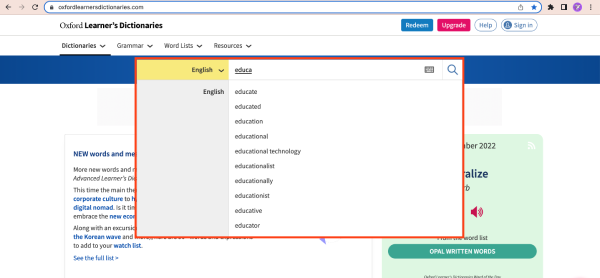
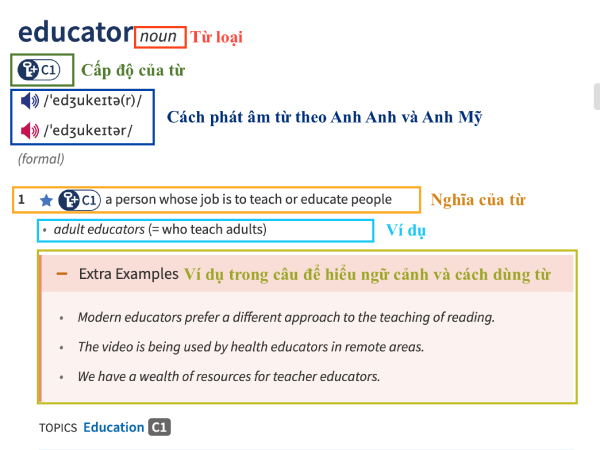
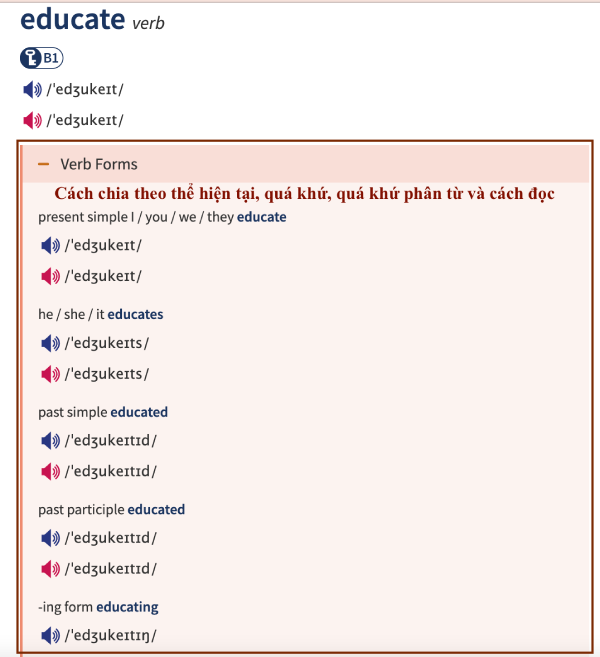
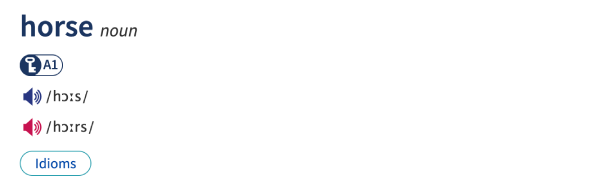
1. Word types : noun, verb, adjective, adverb, preposition, article, etc.
2. Pronunciation : The blue speaker is the British English pronunciation, the red speaker is the American English pronunciation.
3. Word level : English is divided into 6 levels: A1, A2, B1, B2, C1, C2. This detail from the Oxford dictionary will show you which level the vocabulary you are looking up belongs to.
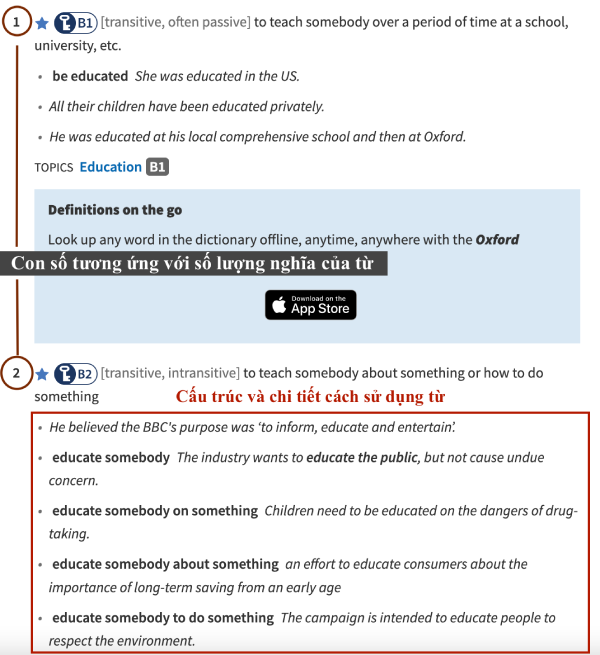
4. Word meaning : The number corresponds to the order of the word’s meaning. The meaning and number are arranged according to the commonly used meaning of the word.
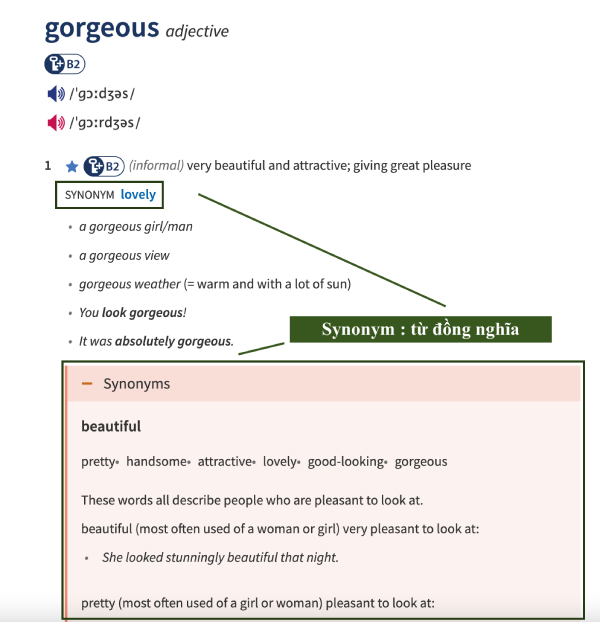
5. Example : Each word has an example to help you fully understand the context and usage of the word in many different situations.
HOW TO LOOK UP IDIOMS AND PHRASAL VERBS
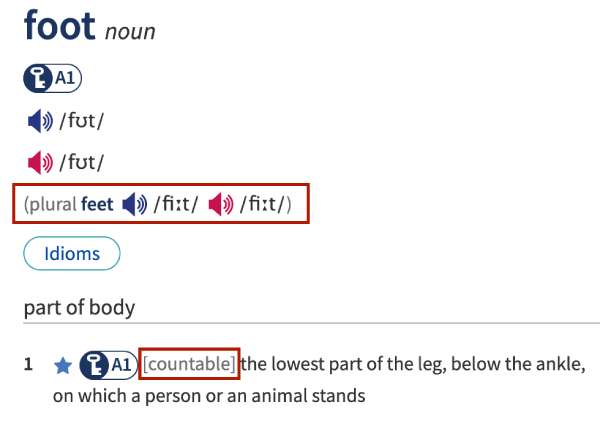
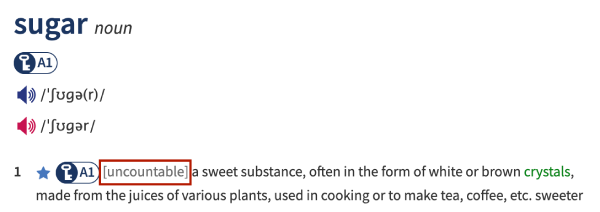
SOME TERMS USED IN THE OXFORD DICTIONARY
HOW TO USE THE WORD LIST FEATURE
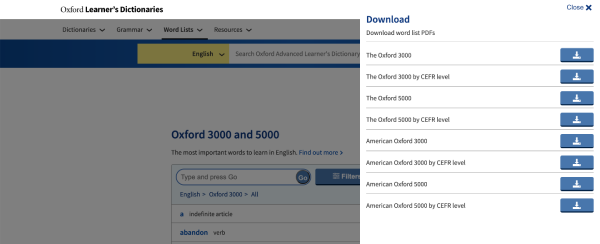
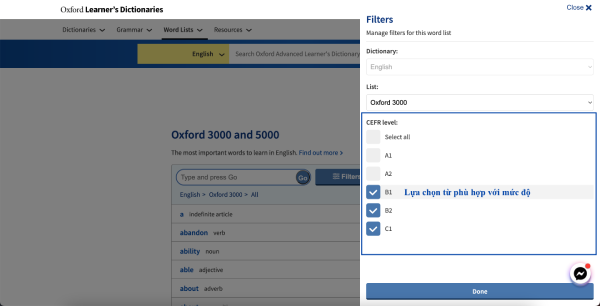
WORD LIST FEATURES
TOPICS FEATURE (VOCABULARY BY TOPIC)
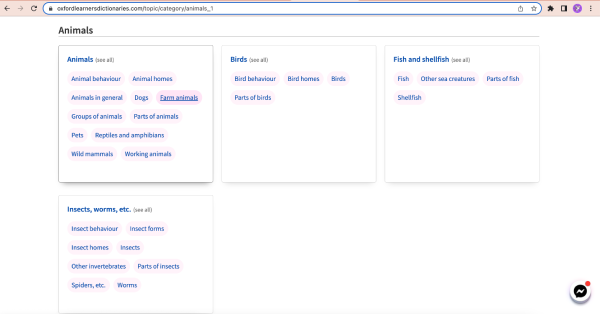
Within each major topic there are many subtopics.
For example: When clicking on the Animal topic, there are many subtopics as above, divided into 4 groups: Animals, Birds, Fish and Shellfish, Insects, worms, etc. Within each minor topic there will be countless different groups.
Above is a basic guide from A-Z on how to use, introduce interesting features and how to take advantage of all the features of the Oxford online dictionary.
Hopefully the help and advice from 2G Education will develop and perfect your English learning process!