
Are you curious about the secret to achieving a high score in IELTS Speaking? Besides being confident, speaking English fluently and grammatically, one way to gain an advantage in the Speaking test is to use idioms. Idioms are one of the factors that help distinguish between fluent English speakers and beginners.

What is Idiom?
If Vietnamese has idioms and proverbs, so does English. Idioms are simply English idioms, sentences that cannot be translated literally but should be inferred from figurative meaning. Idioms are often used to describe, compare, and convey information from the speaker to the listener in a more subtle and interesting way.
Why do many people who score high in IELTS Speaking recommend using idioms?
In fact, in the IELTS Speaking scoring criteria, one criterion to increase the band score for those with good speaking skills is: “Uses some less common and idiomatic vocabulary” which means using rare words and idioms in sentences. For this reason, when using idioms, candidates who speak well can easily get a higher score.
Using idioms incorrectly
So the question is, will using idioms incorrectly result in losing points? A piece of advice for those who are not good at speaking English is that you should not use idioms if you do not really understand them.

Some common mistakes when using idioms include:
1. Using idioms indiscriminately with the desire to increase your Speaking score: You should not always use a lot of idioms in your speech regardless of their appropriateness. Using a lot of idioms is not the way to make your speech highly appreciated, but it also depends on many factors such as fluency, grammar, confidence and speaking style, content of the speech, etc. Sometimes, using too many idioms makes your sentences obscure and difficult to understand.
2. Use rare idioms that native speakers do not use often. If you use idioms that even native speakers do not understand, then putting idioms in your speech is completely useless.
Using idioms without knowing or without clearly understanding their meaning will even be counterproductive to your speaking. So before learning idioms, you should learn to master vocabulary and collocations. When your vocabulary and grammar are quite solid, learn more idioms to make your speaking more lively and interesting.
Some good idioms by topic
Below are some good idioms by topic that you can apply.
Health
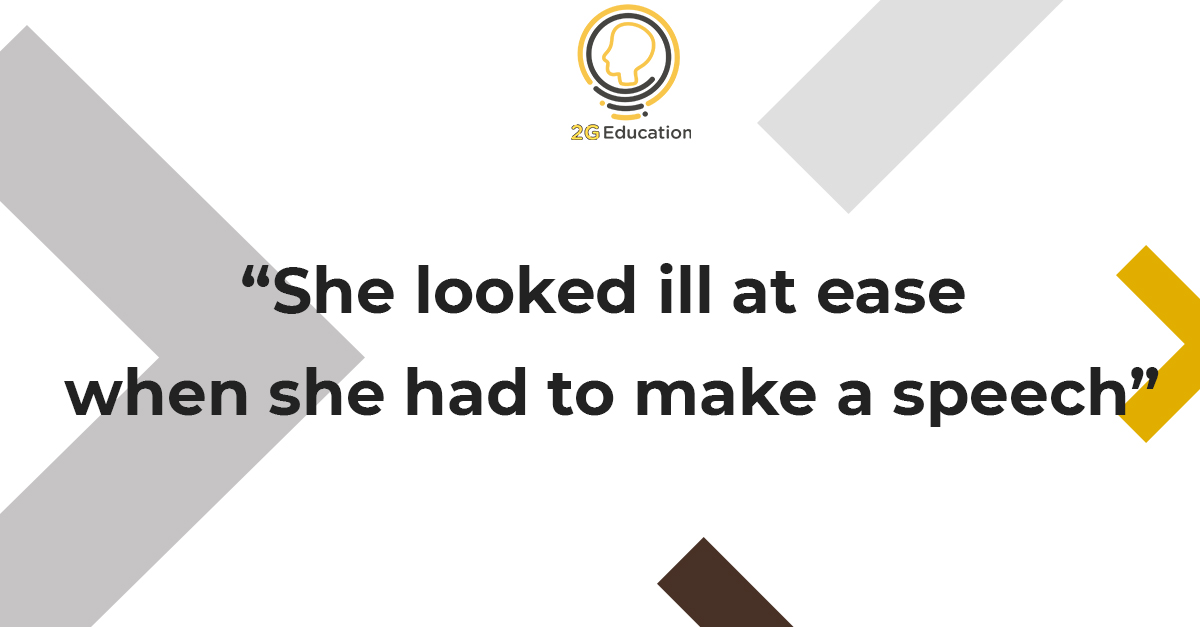
– Ill at ease: feel anxious and uncomfortable
Eg: She looked ill at ease when she had to make a speech.
– Breathe one’s last: breathe one’s last
Eg: My aunt always wanted to find her lost necklace before she breathed his last.
– Catch a cold: catch a cold
Eg: He caught a cold after the summer vacation.
– Nothing but skin and bones: refers to being very skinny, skin and bones
Eg: The kids there have nothing to eat. They’re nothing but skin and bones.
Love

– Tie the knot: marry someone
Eg: After a few months of dating, they decided to tie the knot in June.
– Love at first sight: love at first sight
Eg: Jim and Sue had a very happy ending after three months of dating. It was love at first sight.
– Match made in heaven: match made in heaven
Eg: Peter and Anna are a match made in heaven.
– Have a crush on someone: like someone, have a crush on someone
Eg: She’s had a crush on him since she saw him at the party.
– To love with all your heart and soul: to love someone with all your heart and mind
Eg: I loved him with all my heart and soul.
– Wear your heart on your sleeve: show your feelings
Eg: I can tell that Sue is so sad after her broken relationship. She wears her heart on her sleeve.
Job
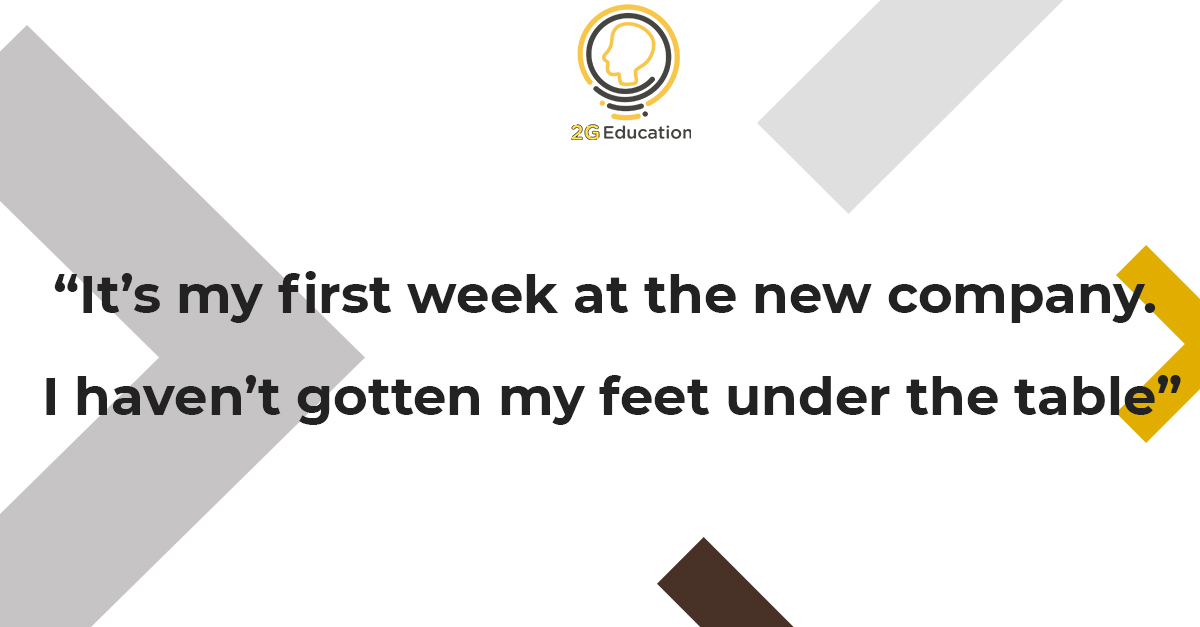
– Get your feet under the table: get used to the job
Eg: It’s my first week at the new company. I haven’t gotten my feet under the table.
– Go the extra mile: willing to go the extra mile to complete work beyond expectations
Eg: Mary always goes the extra mile to make the job done.
– Put one’s feet up: relax
Eg: After a hard day at work, he likes putting feet up and reads some books.
– Be in someone’s good (or bad) books: do something that makes someone feel happy (angry)
Eg: All kids want to be in their parents’ good books.
– Give someone the sack: fire someone
Eg: His work has been getting worse and worse. It’s time to give him the sack.
– Call it a day: take a break, implying stopping what you are doing
Eg: ‘We worked so hard today. Let’s call it a day before 5 pm’
– Work like a dog: work hard
Eg: To meet the deadline, Lan works like a dog.
– All in a day’s work: refers to all the daily work you have to do
Eg: She is a chef. For her, cooking is all in a day’s work.
– Work one’s fingers to the bone: work extremely hard, especially at manual work
Eg: I’ve worked my fingers to the bone but I haven’t finished the work
Hope the above information will help you in your IELTS preparation process! Follow more articles of 2G in the Blogs section .